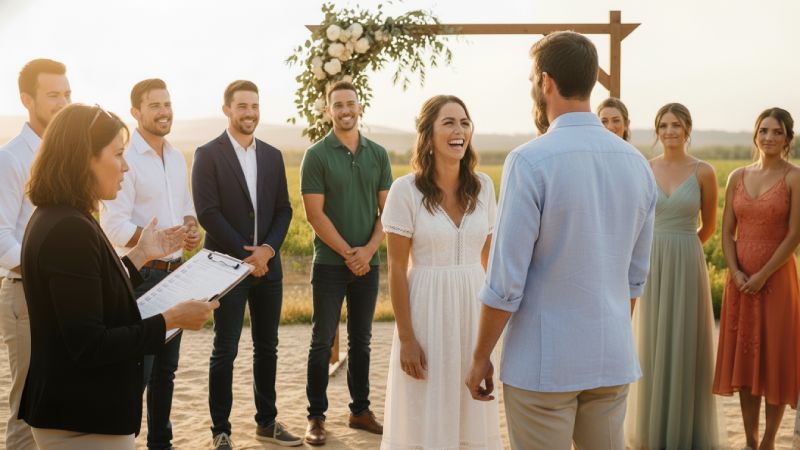
Your wedding rehearsal provides everyone with an opportunity to practice their roles before the big day arrives. A wedding rehearsal checklist helps keep your run-through organized and ensures that nothing is missed during this crucial preparation time. Walking through the ceremony beforehand helps your wedding party feel confident about their timing, positioning, and responsibilities when it counts.
Please download our wedding rehearsal checklist here.
Block out 30-60 minutes for your ceremony rehearsal, depending on the complexity of the arrangements and the number of people involved. Small wedding parties with straightforward ceremonies tend to proceed more quickly, while elaborate setups with multiple readings or cultural traditions require more time. Start at least two hours before your dinner reservation so youre not rushing everyone to the restaurant frantically.
Book your rehearsal time with the venue weeks in advance—churches and ceremony sites pack their weekends with back-to-back weddings. Double-check your time slot with both the venue coordinator and your wedding officiant so nobody shows up on the wrong day. Give your wedding party the schedule at least two weeks in advance so they can request time off work or adjust their travel plans.
Email your wedding party the details about a week before—where to park, which entrance to use, what time to arrive, and what to wear. Throw in a contact number for anyone who gets lost or stuck in traffic. Nobody needs to dress up for rehearsal; comfortable clothes work fine since youre just running through movements.
Your wedding officiant handles most of the directing, but having your wedding planner present helps with venue-specific logistics and any questions that may arise. Musicians usually skip rehearsal unless youre doing something unusual with cultural music or complex timing. Photographers sometimes shoot rehearsal dinners but rarely bother with the practice ceremony itself.
Rehearsal dinners happen right after your ceremony run-through, giving your closest people a chance to celebrate together before the wedding day madness begins. Heres what to plan for your rehearsal dinner:
Your ceremony rehearsal runs through every moment in the same order itll happen tomorrow. Practice each move, pause, and transition so your wedding party knows where to go and when. Walking through the full sequence calms nerves and stops people from panicking about messing up:
Start with everyone in their pre-ceremony spots—groomsmen and groom up front, bridesmaids and bride in back. Walk through the processional order slowly, spacing out each person or pair as they enter. Your wedding officiant or planner counts beats or hums the processional song to get the timing right between entries.
Run the processional a minimum of twice so your wedding party gets comfortable with pacing and spacing. Flower girls and ring bearers may need extra practice or pep talks, as little kids often freeze up when walking alone in front of a crowd. Pick someone to gently nudge or encourage young attendants if they get stuck or distracted tomorrow.
Recessionals move way faster since everyones excited and ready to celebrate. Practice the exit order and pairing—you two first, then wedding party pairs, then parents and family. Confirm where everyone will go after walking out, whether youre forming a receiving line, heading somewhere private for photos, or proceeding directly to cocktails.
Figure out exactly where youll stand during vows and rings so you know your positioning relative to the wedding officiant and guests. Decide if youll face each other, face the officiant, or angle yourselves so guests see both your faces. The officiant runs through the script timing without reading the full vows—just indicating when youll speak and exchange rings.
Pick whos holding the rings during the ceremony—best man and maid of honor get this job, or sometimes a ring bearer if theyre old enough to be trusted. Practice passing rings to the officiant or directly to each other so everyone knows the sequence. Run through unity ceremonies, such as candle lighting or sand pouring, if youre including them.
Mark the location of each wedding party member using tape, chairs, or verbal cues that theyll remember tomorrow. Practice these positioning details during your ceremony rehearsal:
Certain individuals are required to attend rehearsal to ensure everything runs smoothly and everyone is prepared for the ceremony. Knowing who needs to show up and what theyre doing helps you plan your rehearsal invitation list. Clear role assignments stop confusion tomorrow:
You two are the main event, practicing your entrance, positioning, vows, ring exchange, and exit. Your whole wedding party comes to learn their specific jobs—when to enter, where to stand, and what to do during different ceremony moments. Bridesmaids, groomsmen, maid of honor, best man, flower girls, and ring bearers all need to be there.
Parents and step-parents should come if theyre walking in the processional, lighting unity candles, or have other ceremony roles. Readers, live musicians performing during the ceremony, and anyone delivering special readings or blessings should practice their timing and positioning. Ushers should attend if youre doing formal seating procedures or need them to roll out an aisle runner.
Your wedding officiant runs the show, directing people on where to stand and explaining the ceremonys flow from start to finish. They walk through their script timing, point out when youll speak or move, and answer questions about ceremony procedures. The officiant knows the venues specific rules about photography, music, and decorations affecting your ceremony.
Wedding planners or coordinators handle logistics like unlocking the venue, setting up ceremony props, and keeping rehearsals on schedule. They field questions about reception timeline, photography schedules, and vendor coordination. No planner? Grab a detail-oriented friend or family member to watch the clock and round up people who wander off.
Immediate family members come to rehearsal if theyre walking in the processional or have specific ceremony roles, such as holding the chuppah or presenting cultural traditions. Grandparents participating in the processional should practice walking the aisle, especially if they have mobility issues that require extra time or assistance. Step-parents and blended family members require clear direction on their roles and positioning to prevent confusion or hurt feelings.
Kids in your wedding party benefit from practicing but lose focus after 10-15 minutes. Keep their rehearsal time short and let parents hang nearby to help manage young attendants. Anyone performing special music, readings, or cultural ceremonies should practice their timing and positioning even if theyre not part of your main wedding party.
Your wedding rehearsal creates moments that are both funny and sweet, worth documenting alongside your ceremony and reception memories. Heres how to collect photos from your rehearsal and dinner:
WedUploader helps couples collect photos from rehearsal dinners, ceremonies, receptions, and every celebration in between with unlimited albums stored directly in your Google Drive. Create separate QR codes for each event, allowing guests to upload their photos to the corresponding album without confusion. Start your free album today and preserve every moment from your wedding weekend!
Your wedding rehearsal checklist should cover the processional order, ceremony positioning, timing of the vows and ring exchange, and the recessional sequence. Include vendor coordination details, venue logistics, and whos responsible for specific ceremony elements, such as readings or unity ceremonies.
Wedding ceremony rehearsals last 30-60 minutes, depending on the complexity of your ceremony and the size of your wedding party. Simple ceremonies with small wedding parties tend to finish faster, while elaborate ceremonies with multiple traditions require longer practice time.