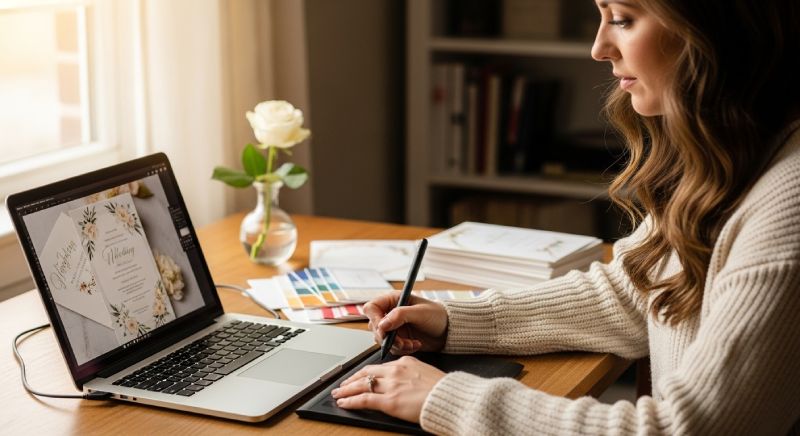
Wedding invitations range from free digital versions to pricey custom designs with all the bells and whistles. What youll spend comes down to your printing method, paper choice, how detailed your design is, and how many people youre inviting—knowing what affects the price helps you figure out where to splurge and where to save for your big day.
Three things control how much youll spend on wedding invitations: the paper and printing method you choose, how customized your design gets, and how many you need to order. Paper quality and printing style make the biggest difference in price, design details, and customization add-ons from there, and your guest list dictates how many invitations youre buying:
Paper weight, texture, and printing technique affect your costs more than anything else. Heres how different printing methods change what youll spend:
| Printing Method | Cost Level | Best For | Texture |
|---|---|---|---|
| Digital Printing | Budget-friendly | Full-color designs, photos, casual invitations | Flat, no texture |
| Thermography | Mid-range | Textured look at lower cost | Raised surface, smooth back |
| Letterpress | Higher-end | Simple elegant designs, minimal colors | Pressed impression you can feel |
| Foil Stamping | Mid-range with upgrades | Metallic accents on text and borders | Shiny metallic finish |
Printers charge less per invitation when you order more at once. Buying 150 invitations costs less per piece than ordering 50 of the same design. Look at the pricing jumps at different quantities—sometimes ordering 25 more invitations barely costs extra.
Order more than your final guest count. You may mess up addresses, add people at the last minute, and want to keep a few for yourself. Reordering a small batch later always costs more than just ordering extras the first time. Dont forget your RSVP cards, detail cards, and any other inserts—you need the same quantity for each piece, so every extra item you add multiplies what youre spending.
Simple designs with one or two fonts and basic graphics cost less than elaborate layouts with custom illustrations. Embellishments dress up plain invitations, but each one costs extra:
Invitation styles range from free digital versions to expensive handmade ones. Heres what changes as prices go up:
Online wedding invitations cost nothing to send. Email or text them to your guest list, and youre done. They work well for casual weddings or destination events where you need to get information out quickly. You can add a QR code that sends guests straight to a photo upload page—they snap pictures at your wedding, and everything lands in your Google Drive without downloading anything.
Basic paper invitations with digital printing cost less than fancier options. Pick a template, customize it, and order in bulk. Single-page designs cost less than folded cards, and limiting yourself to one or two ink colors keeps the price down. Printing invitations yourself seems cheaper until you factor in ink cartridges, specialty paper, and hours spent trimming and assembling. Youll probably spend more than just ordering from a printer, and your home printer wont give you the same print quality.
Letterpress, foil stamping, and better paper sit in the middle price-wise. These options give you more than basic printing without the cost of luxury materials:
High-end invitations use materials like handmade paper, silk, velvet, or acrylic. They include hand calligraphy, custom illustrations, or laser-cut details that take hours to create. Someone assembles each piece by hand instead of running them through a printing press.
Letterpress on thick cotton paper with painted edges, wax seals, and silk ribbons costs the most.
Some come in boxes or fabric pouches instead of envelopes. Youre buying something decorative that guests will probably keep instead of tossing. Hiring a designer to create original artwork from scratch costs more than using templates. Youre paying for someones time to draw or design something specifically for you that no one else will have.
You dont have to spend a fortune on invitations. Heres where you can cut costs without ending up with something that looks cheap:
DIY invitations cost less if you can design them yourself and have time for assembly. Professional printing services handle everything but cost more:
Buying your invitations, RSVP cards, and thank you cards together costs less than ordering them separately. Printers discount bundles, so figure out everything you need before placing your order. Ordering more invitations drops the price per piece. Look at what it costs to order 100 versus 125—sometimes the difference is tiny, so you might as well get the extras.
Skip the stuff you dont care about. Envelope liners, belly bands, and ribbons look nice, but add cost and assembly time. Cut anything that doesnt matter to you. If youre adding an insert card anyway, a QR code takes up no extra space and lets guests upload their wedding photos straight to your Google Drive instead of texting them to you one by one. Keep in mind that USPS charges extra postage for square envelopes or anything with wax seals and ribbons, so decorative elements affect both your printing and mailing costs.
You can order online invitations or work with a local shop:
Invitations add up between design, printing, and postage. Photo collection shouldnt. Most apps charge monthly fees, compress your photos, or require guests to download an app to share pictures. WedUploader skips all that—guests scan a QR code and upload straight to your Google Drive in original quality. No apps, no logins, no recurring charges. One payment covers unlimited albums for your engagement party, shower, rehearsal, and wedding. Visit WedUploader to set up your photo collection.
Wedding invitation costs range from free digital versions to expensive custom designs. Digital ones cost nothing to send, while printed wedding invitations depend on your paper choice, printing style, and how detailed your design gets.
A wedding invitation suite includes your main invitation card, an RSVP card with its own envelope, a reception details card, and an outer envelope. You can add extra cards for directions, hotel info, or weekend schedules. Some couples include an insert card with a QR code so guests can upload photos straight to Google Drive during the wedding.
Order invitations a few months before your wedding date to make time for design, printing, assembly, and addressing. The Emily Post Institute recommends mailing invitations 6-8 weeks before the wedding, so work backwards from that timeline to place your order.
Yes, order at least 10-15 more than you need. Mistakes happen when addressing envelopes, and youll probably think of a few more people to invite after you place your order. Plus, youll want a few for yourself as keepsakes.